

Wedding dressing often involves a fine balance between looking festive and keeping the overall appearance comfortable. Choosing sarees for wedding celebrations becomes easier when the fabric, color, embellishment, and styling are considered together rather than treating each detail as a separate decision.
Not every wedding requires a heavily decorated outfit. Daytime ceremonies may suit softer colors and lighter fabrics, while evening functions can accommodate richer shades and more noticeable details. The right saree should complement the occasion while still allowing the wearer’s personal style to remain visible.
Understanding the Wedding Setting
The type of wedding function should influence the saree you choose. A daytime engagement, traditional ceremony, reception, or intimate family gathering can each have a different atmosphere, so wearing the same level of embellishment to every event may not always feel appropriate.
The venue matters too. Outdoor celebrations can make lighter fabrics and breathable designs more practical, while formal indoor receptions may allow heavier textures and detailed embroidery. Considering these elements before choosing an outfit can prevent unnecessary styling complications later.
Choosing Fabric for Comfort
Fabric affects both the appearance and practicality of a saree. Silk can create a richer traditional finish, while chiffon and georgette offer softer movement. Organza brings structure, whereas lighter cotton blends can work well for daytime ceremonies where comfort is important.
When comparing different fabrics, think about:
-
Weather and expected temperature
-
Duration of the wedding function
-
Amount of embroidery or embellishment
-
Ease of movement while wearing the saree
A beautiful fabric is only useful when it also feels manageable throughout the celebration. Comfort becomes especially important when several ceremonies take place on the same day.
Getting the Color Right
Color can influence how formal or relaxed a wedding outfit appears. Deep jewel tones often work beautifully for evening celebrations, while pastels and softer shades can create a lighter daytime appearance. Traditional colors can also be adapted through modern blouse designs or contemporary accessories.
It is worth considering the surrounding décor as well. If the venue already features strong colors, a saree with balanced detailing may look more harmonious than another heavily decorated element. The aim is to complement the celebration without making the outfit feel disconnected from its surroundings.
When a Wedding Saree Becomes Too Much
A wedding saree does not need to rely on heavy embellishment to create an elegant appearance. Excessive embroidery, sequins, jewelry, and elaborate accessories can sometimes compete with one another instead of creating a cohesive look.
A better approach is to choose one or two elements as the focus. If the saree has detailed embroidery, simpler jewelry may work well. Similarly, a relatively plain saree can support more noticeable earrings or a statement blouse. This creates visual balance and allows individual details to stand out without overwhelming the complete outfit.
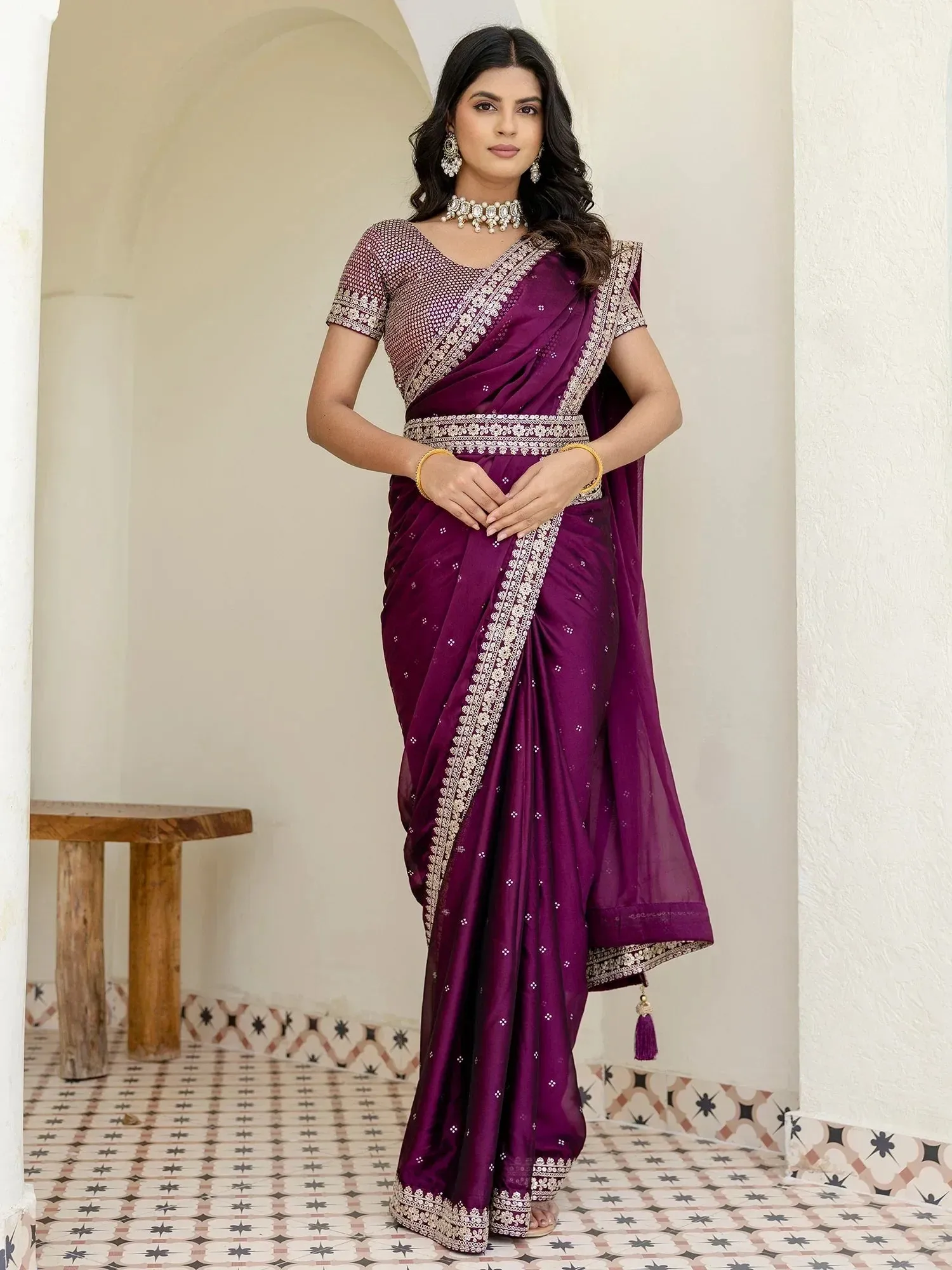

Styling the Blouse Carefully
The blouse can completely change the character of a saree. A traditional neckline and sleeves can reinforce a classic appearance, while structured cuts or contemporary details can make the same saree feel more modern. The blouse should complement the saree rather than simply matching its color.
Neckline, sleeve length, fabric, and embroidery all deserve attention. A heavily detailed saree may benefit from a cleaner blouse, while a simpler saree can accommodate more decorative blouse work. Keeping these elements balanced helps the outfit appear intentional rather than excessively styled.
Accessories Should Support the Saree
Jewelry and footwear are important parts of wedding dressing, but they do not necessarily need to be elaborate. Gold jewelry can enhance traditional silk sarees, while pearls or delicate pieces may suit softer contemporary fabrics. The choice should reflect the saree’s overall personality.
A simple styling checklist can include:
-
Jewelry that complements rather than competes
-
Footwear suitable for extended standing
-
A handbag that works with the color palette
-
Hair and makeup suited to the neckline
These details can make the outfit feel complete without adding unnecessary layers of decoration.
Keeping the Look Timeless
Wedding fashion trends change quickly, but classic sarees often remain useful for years. Choosing a versatile color, comfortable fabric, and balanced design can make an outfit suitable for future celebrations rather than limiting it to one particular event.
Personal style should also remain part of the decision. An outfit that feels natural is often more appealing than one chosen solely because it is fashionable. Thoughtful styling allows traditional clothing to evolve without losing the elegance that makes it appropriate for important family occasions.
Conclusion
Choosing a saree for a wedding is ultimately about finding the right balance between occasion, comfort, and personal taste. Instead of combining every available decorative element, focusing on fabric, color, blouse design, and a few well-chosen accessories can create a more refined result. A thoughtfully styled saree can feel festive enough for the celebration while remaining comfortable, practical, and elegant throughout the event.