

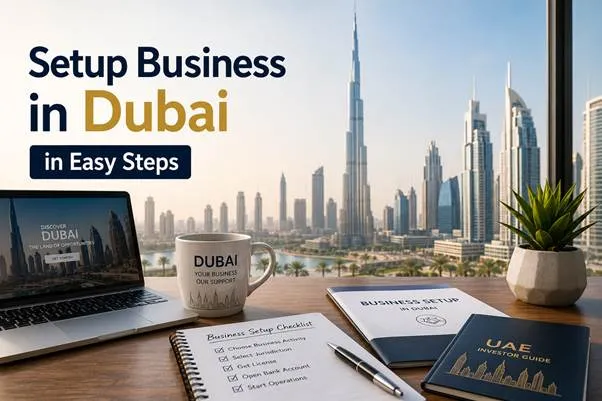

Dubai has cemented its status as a premier global business hub, attracting entrepreneurs and investors from all corners of the world. Its strategic location, pro-business policies, and world-class infrastructure make it an ideal place to establish and grow a company. Setting up a business here might seem complex at first glance, but with the right information and a structured approach, it can be a straightforward and rewarding process. This article provides a clear, step-by-step guide on How to setup your business in Dubai, offering valuable insights for anyone looking to enter this dynamic market.
Key Takeaways:
-
Dubai offers diverse business structures including Sole Proprietorship, Civil Company, LLC, and Free Zone Company.
-
Businesses can operate in Mainland, Free Zones, or Offshore jurisdictions, each with distinct benefits.
-
Dubai’s appeal stems from its economic stability, zero corporate/personal income tax (with exceptions), strategic location, and robust infrastructure.
-
Individuals, corporate entities, and partnerships can establish businesses, provided they meet legal requirements.
-
The optimal time to start is often linked to thorough market research and readiness, rather than a specific calendar period.
-
The setup process involves selecting a legal structure, jurisdiction, trade name, applying for initial approval, preparing legal documents, and securing a license.
-
Free Zones like Meydan Free Zone offer 100% foreign ownership, full repatriation of profits, and simplified setup procedures.
Understanding Business Structures and Jurisdictions
What to know before you start? Before starting your business in Dubai, it’s essential to grasp the fundamental options available: your legal structure and your operating jurisdiction. These choices will impact everything from ownership to operational freedom and taxation.
-
Legal Structures:
-
Sole Proprietorship: Owned by one individual, suitable for service-based businesses, with unlimited liability.
-
Civil Company: For professionals (e.g., doctors, lawyers, consultants), requiring local service agent and 100% foreign ownership often allowed.
-
Limited Liability Company (LLC): The most common structure for commercial businesses, typically requiring a local partner owning 51% (though recent law changes allow 100% foreign ownership in many sectors on the Mainland).
-
Free Zone Company: Offers 100% foreign ownership, full profit repatriation, and no personal or corporate tax, ideal for international trade and specific sectors.
-
Jurisdictions:
-
Mainland: Licensed by the Department of Economic Development (DED), allowing trade anywhere in the UAE and internationally. Offers wider market access but might have specific ownership requirements.
-
Free Zone: Special economic areas designed to promote specific industries, offering significant incentives for foreign investors. Each free zone has its own regulations and permitted activities.
-
Offshore: For companies not intending to conduct business within the UAE, often used for holding companies or international transactions, with complete tax exemptions.
Dubai’s Appeal: Why Entrepreneurs Choose It
Why Dubai is an attractive business location? Dubai stands out globally for numerous reasons, making it a magnet for entrepreneurs seeking growth and stability. Its proactive government and forward-thinking vision contribute significantly to its business-friendly environment.
-
Economic Stability and Growth: A robust and diversified economy, less reliant on oil, with continuous growth driven by tourism, trade, finance, and logistics.
-
Strategic Global Location: Positioned at the crossroads of East and West, offering easy access to markets in the Middle East, Africa, and Asia.
-
Tax Efficiency: Generally, zero corporate and personal income tax, making it highly attractive for profit retention (note: VAT applies, and corporate tax has been introduced for financial years starting on or after June 1, 2023, for profits exceeding AED 375,000, with certain exemptions).
-
World-Class Infrastructure: Modern transportation networks, state-of-the-art office spaces, reliable utilities, and advanced telecommunications.
-
Ease of Doing Business: Continuous efforts by the government to simplify regulations and streamline processes, improving its global ranking.
-
Access to a Global Talent Pool: A diverse expatriate population provides a skilled and multicultural workforce.
-
Safe and Secure Environment: Low crime rates and high quality of life for residents and their families.
Who Can Establish a Company in Dubai?
Who can set up a business in Dubai? Dubai’s business landscape is welcoming to a wide range of investors and entities, provided they meet the established legal and regulatory criteria. The eligibility largely depends on the chosen business structure and jurisdiction.
-
Individuals: Any adult individual of any nationality can set up a business in Dubai, either as a sole proprietor or as a shareholder in a larger entity. They must have a valid passport and meet specific visa requirements if relocating.
-
Corporate Entities: Existing companies, whether local or international, can establish branches, representative offices, or new subsidiaries in Dubai. This allows them to expand their operations into the UAE market.
-
Partnerships: Multiple individuals or corporate entities can form partnerships to establish a business, pooling resources and expertise.
-
Free Zone Specifics: Free zones typically have straightforward requirements, often only needing passport copies and a notarized application from the individual or company representatives.
-
Mainland Specifics: Mainland companies, especially before the recent 100% foreign ownership amendments, often required a local sponsor (UAE national) for certain business activities, though this is now significantly reduced.
Optimal Timing for Your Dubai Business Launch
When is the best time to start? While there isn’t a single “best” calendar period to launch a business in Dubai, the optimal timing usually correlates with thorough preparation, market readiness, and external factors that can influence your venture’s success.
-
After Thorough Market Research: The best time is when you have a clear understanding of your target market, competitive landscape, and demand for your products or services.
-
When Financial Resources Are Secure: Ensure you have adequate capital not just for setup costs but also for initial operational expenses and a buffer for unexpected challenges.
-
Following Legal and Regulatory Clarity: With ongoing reforms, especially regarding ownership rules, starting when new laws are clear and implemented can provide more certainty.
-
Strategic Market Entry: Consider seasonal demands or specific industry events. For instance, businesses in tourism might want to be operational before peak tourist seasons.
-
When Your Business Plan is Robust: A well-developed business plan, outlining your strategy, operations, marketing, and financial projections, indicates readiness.
-
Personal Readiness: Ensure you or your core team are prepared for the relocation and the initial challenges of establishing a new entity in a foreign environment.
Choosing Your Business Location: Mainland or Free Zone?
Where can you set up your business? The choice of location for your business in Dubai is crucial, as it determines your operational scope, ownership structure, and legal framework. The two primary options are the Mainland and Free Zones, each with distinct advantages.
-
Mainland Dubai:
-
Market Access: Allows you to trade directly with the UAE local market and conduct business anywhere in the UAE and internationally without restrictions.
-
Licensing Body: Licensed by the Department of Economic Development (DED) in Dubai.
-
Ownership: Recent amendments allow 100% foreign ownership for many business activities, removing the previous requirement for a local partner in many sectors.
-
Office Space: Greater flexibility in choosing office locations across the emirate.
-
Free Zones:
-
Foreign Ownership: Offers 100% foreign ownership, a significant advantage for international investors.
-
Tax Benefits: Typically zero corporate and personal income tax, and 100% repatriation of capital and profits.
-
Simplified Procedures: Often have streamlined setup processes and dedicated regulatory bodies.
-
Specific Industries: Many free zones are tailored to specific industries (e.g., Dubai Internet City for technology, DMCC for commodities), offering industry-specific ecosystems and support.
-
Meydan Free Zone: Located within the iconic Meydan Racecourse, Meydan Free Zone stands out by offering a prestigious address, a wide range of business activities, and a modern, integrated environment. It provides competitive business setup packages, flexible office solutions, and efficient company formation services, making it an excellent choice for businesses seeking a premium yet accessible free zone experience with full ownership and tax benefits. They can assist with everything from license application to visa processing, providing a seamless entry into the Dubai market.
Step-by-Step Business Setup Process
How to setup your business in Dubai in easy steps? Setting up your business in Dubai involves a series of logical steps, whether you opt for a mainland or a free zone entity. Following this systematic approach will streamline the process and help avoid potential delays.
-
Step 1: Determine Your Business Activity:
-
Clearly define what your business will do. This dictates your license type and legal requirements.
-
Ensure your activity is permissible in your chosen jurisdiction (Mainland or Free Zone).
-
Step 2: Choose Your Legal Structure and Jurisdiction:
-
Based on your activity and ownership preference, select between Sole Proprietorship, LLC, Free Zone Company, etc.
-
Decide between Mainland (DED) or a specific Free Zone (e.g., Meydan Free Zone).
-
Step 3: Select a Trade Name:
-
Propose several unique names for your company, adhering to UAE naming conventions (e.g., no offensive words, no religious or governmental terms, company name must reflect activity).
-
Get your chosen name approved by the relevant authority (DED or Free Zone authority).
-
Step 4: Initial Approval:
-
Submit your application and required documents (passport copies, business plan) to the DED or Free Zone authority for initial approval. This confirms that the government has no objection to you starting your business.
-
Step 5: Prepare Legal Documents:
-
Draft and notarize the Memorandum of Association (MOA) or Articles of Association (AOA) for LLCs or similar constitutional documents for other structures.
-
Secure tenancy contracts (Ejari for Mainland, lease agreement for Free Zone) for your office space.
-
Step 6: Secure External Approvals (If Required):
-
Some activities (e.g., healthcare, education, financial services) require additional approvals from specific government entities.
-
Step 7: Obtain Your Business License:
-
Once all documents are prepared and approvals secured, submit them to the DED or Free Zone authority.
-
Pay the licensing fees to receive your official trade license.
-
Step 8: Open a Corporate Bank Account:
-
With your trade license, open a corporate bank account with a local or international bank in the UAE.
-
Step 9: Apply for Visas:
-
Apply for investor visas for shareholders and employment visas for employees, if applicable.
-
Complete residency procedures, including medical tests and Emirates ID registration.